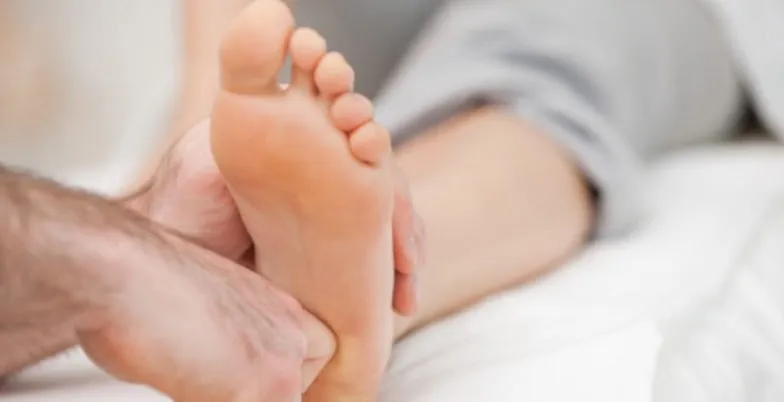
January is when a lot of new year resolutions collide with an old problem: heel pain that has been quietly getting worse since fall. Dr. Hamidi hears the same story often in the Arlington office. Someone ramped up mileage on the W&OD Trail or started a new workout routine, felt a sharp stab in the bottom of the heel with the first steps out of bed, and figured it would work itself out. Months later, the pain is still there, stretching and rest have plateaued, and they are wondering what is left to try short of surgery. For a lot of these patients, shockwave therapy is that next step.
What Plantar Fasciitis Actually Is
The plantar fascia is a thick band of connective tissue running along the bottom of the foot from the heel to the toes. It absorbs shock with every step and helps maintain the arch. When it is repeatedly overloaded, whether from a sudden jump in running mileage, worn-out shoes, tight calves, or simply standing on hard floors all day, small tears develop faster than the tissue can repair itself. The result is degenerative thickening and pain that is classically worst with the first steps in the morning or after sitting for a while. This same overload pattern shows up in other tendons too, particularly the Achilles, and in some of the same patients Dr. Hamidi also treats for knee tendonitis, since a running injury rarely stays isolated to one joint.

Why Rest Alone Often Is Not Enough
Rest reduces the acute inflammation, but tissue that has already started to degenerate does not automatically remodel itself just because you stopped running. Chronic tendon and fascia injuries are often more about disorganized, weakened tissue than active inflammation, which is why anti-inflammatory approaches alone tend to plateau after a few weeks. What that tissue needs is a stimulus that triggers the body to actually rebuild it, and that is the gap shockwave therapy is designed to close.
How Shockwave Therapy Works
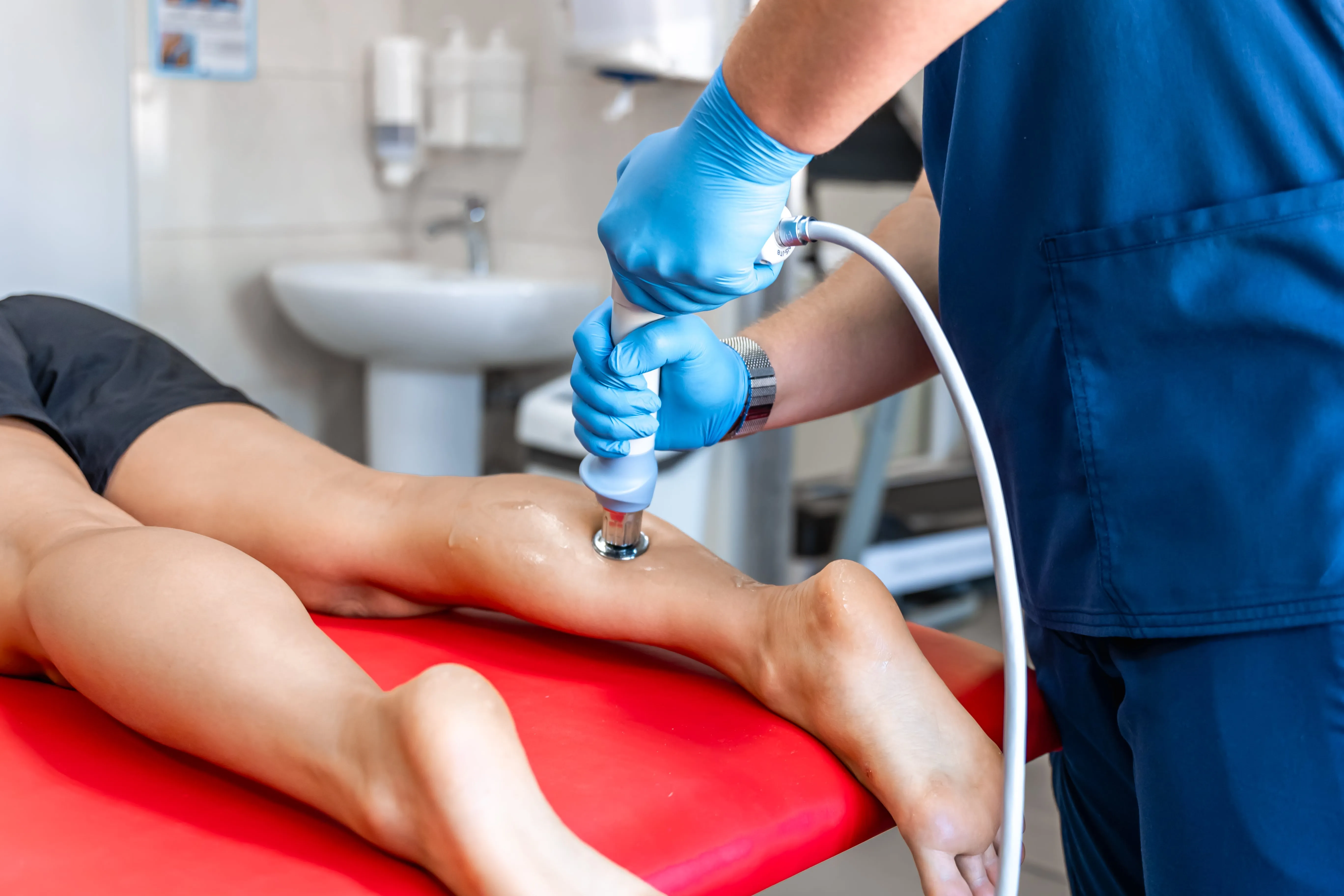
Extracorporeal shockwave therapy delivers focused acoustic pulses through the skin into the injured tissue. Those pulses create controlled microtrauma that increases blood flow to an area that often has poor circulation to begin with, and stimulates the release of growth factors involved in collagen production and tissue repair. In plain terms, it restarts a healing process that has stalled. It is also used for chronic Achilles tendinopathy, tennis elbow, and calcific tendon issues in the shoulder, all conditions where the tissue has settled into a degenerative pattern rather than an acutely inflamed one. You can read more about the treatment itself on our shockwave therapy service page.
What a Session Actually Feels Like
Most patients describe it as an intense, sharp pressure during the pulses rather than outright pain, and it typically lasts under ten minutes for a single area like the heel. There is no needle, no incision, and no downtime, so patients walk out and go back to their day, though we usually recommend easing off high-impact activity for a day or two after each session. A typical plan runs three to six sessions spaced about a week apart, and most people notice a meaningful drop in morning pain within two to three sessions, with continued improvement over the following weeks as the tissue remodels.
Who Is a Good Candidate
Shockwave therapy tends to work best for people who have had pain for at least six to eight weeks despite conservative care like stretching, supportive footwear, and activity modification. That includes runners training for spring races along the Mount Vernon Trail, people on their feet all day for work, and anyone with a tendon problem that has become chronic rather than acute. It is generally not used on acute, actively inflamed injuries, over open wounds, or during pregnancy, which is why the intake exam matters before starting. Runners recovering from an ankle sprain sometimes develop this same kind of chronic tendon pattern in the peroneal tendons; our article on why walking off an ankle sprain backfires covers how an undertreated sprain can lead to exactly the kind of lingering tissue problem shockwave therapy is built to address.
How It Fits Into a Full Recovery Plan
Shockwave therapy on its own addresses the tissue, but the reason the fascia or tendon broke down in the first place, whether that is tight calves, weak intrinsic foot muscles, poor running mechanics, or a leg-length or gait asymmetry, still needs attention. Dr. Hamidi typically pairs shockwave sessions with targeted stretching, strengthening exercises, and sometimes adjustments to the foot, ankle, or lower back if a mechanical issue upstream is contributing to how weight loads through the foot. Patients recovering from a running injury often benefit from the same rehab principles covered in our post on stretches for hip pain relief, since hip and foot mechanics are more connected than most people expect.
Common Questions
How is shockwave therapy different from a cortisone injection? Cortisone reduces inflammation and pain temporarily but does not stimulate tissue repair, and repeated injections can weaken tendon tissue over time. Shockwave therapy targets the underlying tissue quality itself.
Will insurance cover shockwave therapy? Coverage varies by plan and diagnosis. Our front desk can help verify your specific benefits before you start.
How soon can I run again after starting treatment? Most patients continue low-impact activity throughout treatment and gradually return to running as pain decreases, usually guided by how the tissue responds session to session rather than a fixed calendar date.
References
Background on chronic tendinopathy and extracorporeal shockwave therapy is available through the American Academy of Orthopaedic Surgeons OrthoInfo and the National Institute of Arthritis and Musculoskeletal and Skin Diseases.
Takeaway
If heel or tendon pain has outlasted rest, stretching, and new shoes, shockwave therapy offers a non-surgical way to restart the healing process rather than just managing symptoms. Dr. Hamidi will examine your foot mechanics and history to determine whether it is the right fit for your case. Call District Wellness at (571) 568-8496 or schedule through new patient scheduling to get evaluated.