
Summer in Arlington brings its own headache pattern. The humidity climbs, sleep gets disrupted by heat and later sunsets, and a lot of patients spend more time hunched over laptops working remotely from a porch or a coffee shop instead of an ergonomic desk setup. By July, Dr. Hamidi’s schedule fills up with people describing headaches that have gotten more frequent, and the first question is almost always the same: is this a tension headache or a migraine, and does it matter?
It matters quite a bit, because the two conditions have different mechanisms, and the neck plays a different role in each one.
Tension Headaches: The Neck Connection Is Direct
Tension-type headaches are the most common headache disorder, typically described as a band-like pressure or tightness wrapping around the head, often starting at the base of the skull or in the neck and spreading forward. They’re usually bilateral, mild to moderate in intensity, and don’t come with the nausea or light sensitivity that defines migraine.
The neck’s role here is direct and mechanical. The muscles at the base of the skull - the suboccipitals - and the upper trapezius refer pain straight into the head when they’re tight or carrying trigger points. Forward head posture, the kind that develops from hours of looking at a laptop or phone screen, increases the load on these muscles dramatically; for every inch the head shifts forward of the shoulders, the effective weight the neck muscles have to support roughly doubles. That’s a mechanical setup for tension headaches, and it’s why they cluster so heavily among desk workers.
Migraines: More Complex, But the Neck Still Matters
Migraine is a distinct neurological condition involving changes in brain activity and blood vessel function, not simply a bad tension headache. It typically presents as moderate to severe throbbing pain, often one-sided, with nausea, sensitivity to light and sound, and sometimes visual aura beforehand. Migraines have genetic and neurological components that tension headaches don’t share.
That said, neck dysfunction is a well-documented migraine trigger and amplifier in a meaningful subset of patients. This is sometimes called cervicogenic contribution - upper cervical joint restriction and muscle tension can lower the threshold for a migraine attack even when the underlying cause of the migraine itself is neurological. Patients often describe a stiff neck as an early warning sign that an attack is coming.
How Dr. Hamidi Tells Them Apart
The evaluation includes a detailed headache history - location, quality, associated symptoms, triggers, and frequency - along with a hands-on assessment of cervical joint mobility, muscle tightness, and posture. Palpation of the upper cervical spine and suboccipital muscles often reproduces tension headache pain directly, which is a useful diagnostic clue. It’s also important to check for related issues like TMJ dysfunction, since jaw clenching and TMJ problems frequently overlap with headache patterns and can be missed if the exam only looks at the neck.
Treatment Approach
For tension headaches with a clear mechanical component, treatment for headaches at District Wellness typically includes:
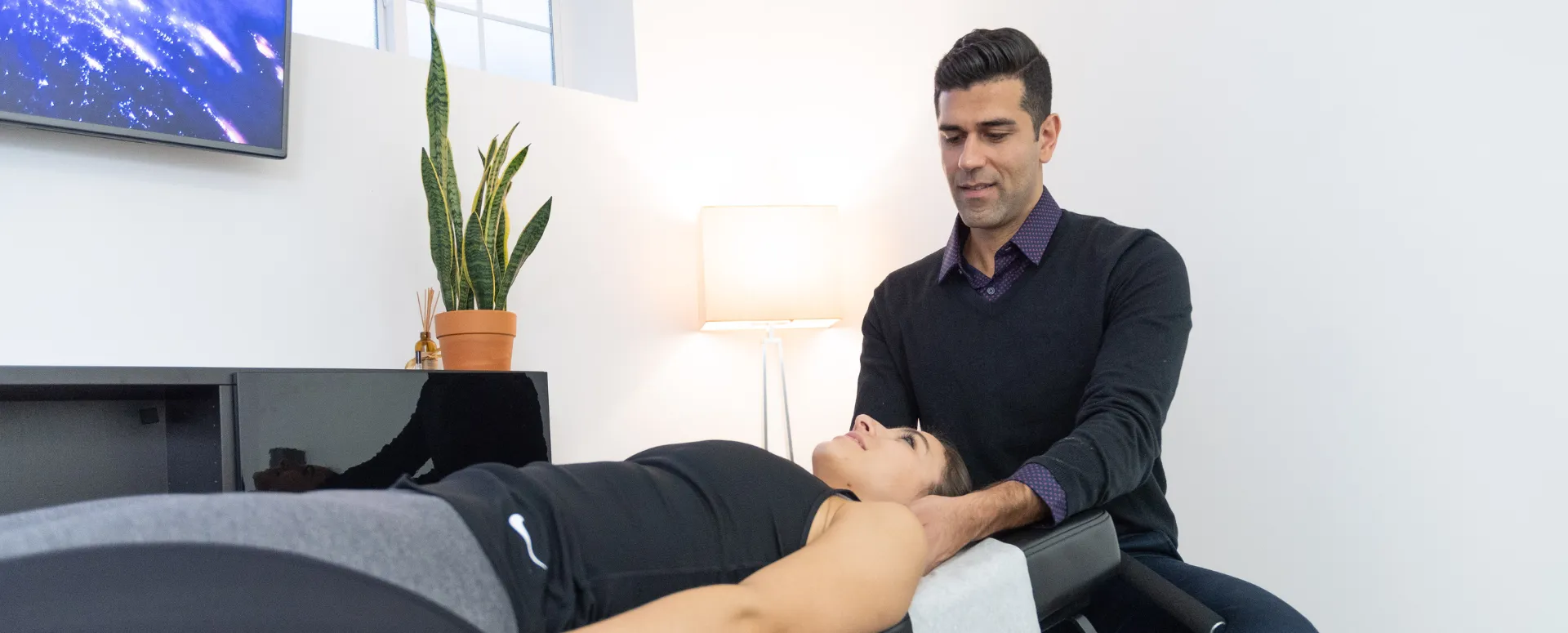
- Cervical spine adjustment to restore normal joint mechanics at the upper neck
- Soft-tissue and trigger point work on the suboccipitals and upper trapezius
- Postural correction exercises targeting the forward head position
- Ergonomic guidance for desk and laptop setup
For migraine patients, the same neck-focused treatment can reduce frequency and severity when cervicogenic triggers are present, though Dr. Hamidi is clear that chiropractic care is a complementary approach for migraine, not a replacement for neurological management when that’s indicated. Referral to a physician is appropriate when red flag symptoms are present or when a headache pattern changes suddenly.

Why Summer Makes It Worse
A few seasonal factors stack up in Arlington specifically:
- Heat and humidity contribute to dehydration, a known headache trigger on its own
- Disrupted sleep from longer daylight and heat affects headache threshold
- More remote and hybrid work happening from couches and porches instead of a proper desk setup increases forward head posture
- Screen glare in bright outdoor light often causes people to squint and crane their neck forward further than usual
Common Questions
Can neck pain cause migraines, or does it just make them worse? In most true migraine cases, the neurological trigger is primary, but neck dysfunction can lower the threshold and increase frequency, which is why treating it often helps even without eliminating the migraine entirely.
How quickly does headache relief happen with chiropractic care? Tension headaches with a clear mechanical driver often improve within a few visits; cervicogenic contributions to migraine typically take longer and are judged by reduced frequency over weeks.
Should I still see a neurologist? If your headaches involve neurological symptoms, sudden severe onset, or don’t fit a typical pattern, yes - Dr. Hamidi will flag this during your evaluation.
Related reading includes Dr. Hamidi’s piece on reducing TMJ pain at home, since jaw tension frequently travels with headache patterns, and why sitting all day causes pain, which covers the same posture mechanics from the low back side.
Takeaway
Tension headaches and migraines are different conditions, but they share a common trigger point in a stiff, poorly positioned neck, especially during a summer of extra screen time and heat-disrupted sleep. If headaches have become a regular part of your week, an evaluation can identify what’s actually driving them. Call District Wellness at (571) 568-8496 or book through new patient scheduling to get started.