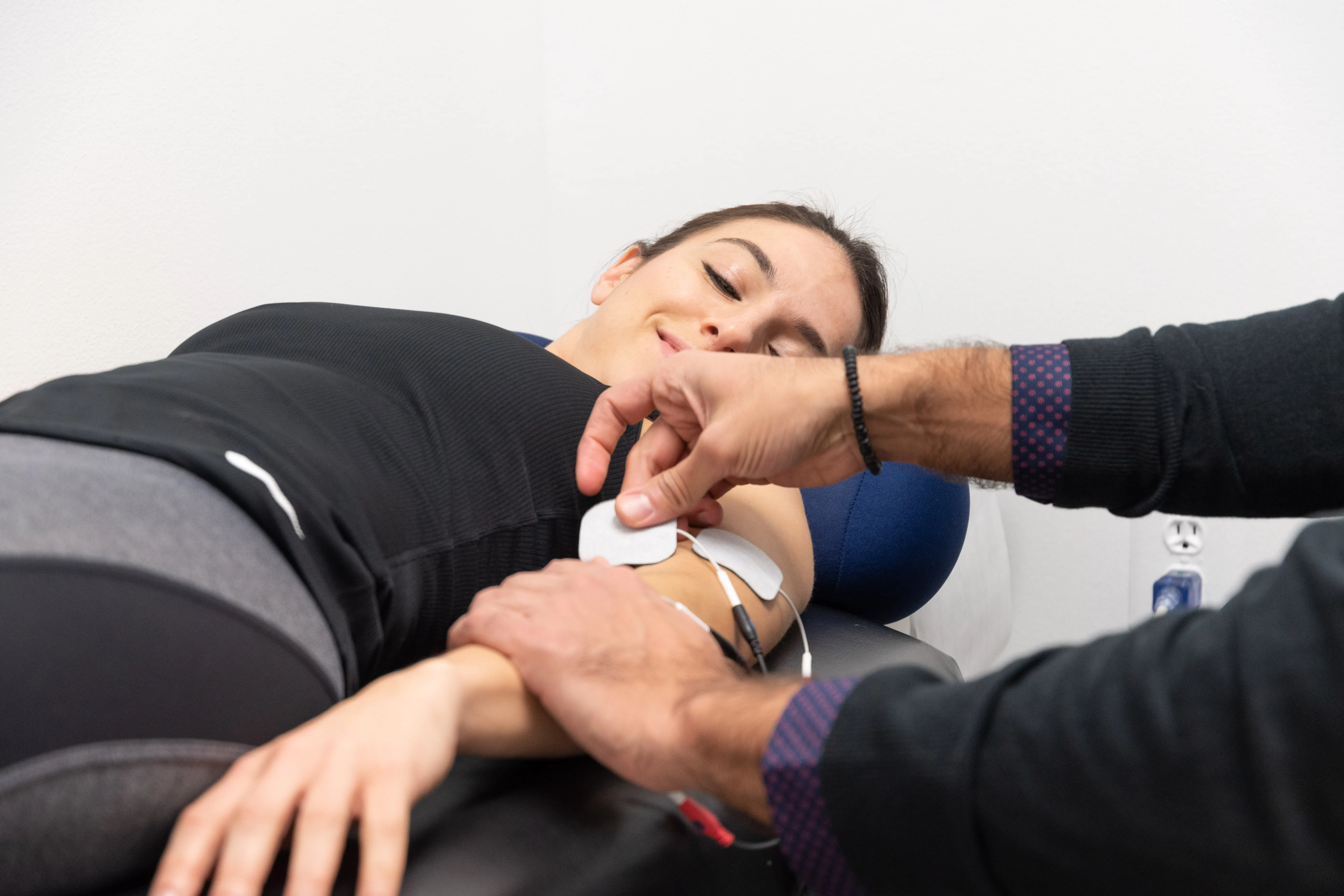
A patient comes in describing numbness in the thumb, index, and middle fingers that wakes them up at night, and their first assumption is almost always carpal tunnel syndrome. Sometimes that’s correct. But Dr. Hamidi has diagnosed plenty of Arlington patients — particularly people doing long hours at a keyboard in the Rosslyn or Ballston office corridors — whose “carpal tunnel” turned out to be a compressed nerve root in the neck, a condition called cervical radiculopathy, that just happens to send symptoms all the way down into the hand.
The reason these two conditions get confused is that both can produce numbness, tingling, and weakness in overlapping parts of the hand. But they originate in completely different places, and treating one when the actual problem is the other means months of wasted effort — wrist splints and ergonomic keyboards that never touch the real source of the compression.
How the Two Conditions Differ
Carpal tunnel syndrome happens when the median nerve gets compressed as it passes through a narrow tunnel of bone and ligament at the wrist. Symptoms are typically confined to the thumb, index, middle, and half of the ring finger — the classic median nerve distribution — and tend to worsen with repetitive wrist flexion, like typing or gripping a steering wheel.
Cervical radiculopathy happens when a nerve root gets compressed as it exits the spine in the neck, usually from a disc bulge, bone spur, or joint inflammation at levels C5 through C7. Depending on which nerve root is involved, symptoms can travel down the arm and into the hand in a pattern that mimics carpal tunnel — but it often comes with neck stiffness, pain that worsens when turning or extending the head, and weakness that doesn’t fit the median nerve’s exact territory.
Clues That Point to the Neck, Not the Wrist
Dr. Hamidi runs through a specific set of questions and orthopedic tests to sort this out, but a few things patients can notice themselves:
- Neck pain or stiffness accompanies the hand symptoms, especially pain that gets worse looking up or turning toward one side.
- Symptoms extend past the wrist into the forearm or upper arm, rather than staying confined to the hand.
- Shaking out your hand doesn’t relieve it the way it classically does with carpal tunnel.
- Symptoms started after a specific neck strain — poor sleeping position, a fender bender, or a period of looking down at a phone for hours.
- Grip weakness or trouble with fine motor tasks shows up alongside the tingling, suggesting motor nerve fiber involvement further up the chain.
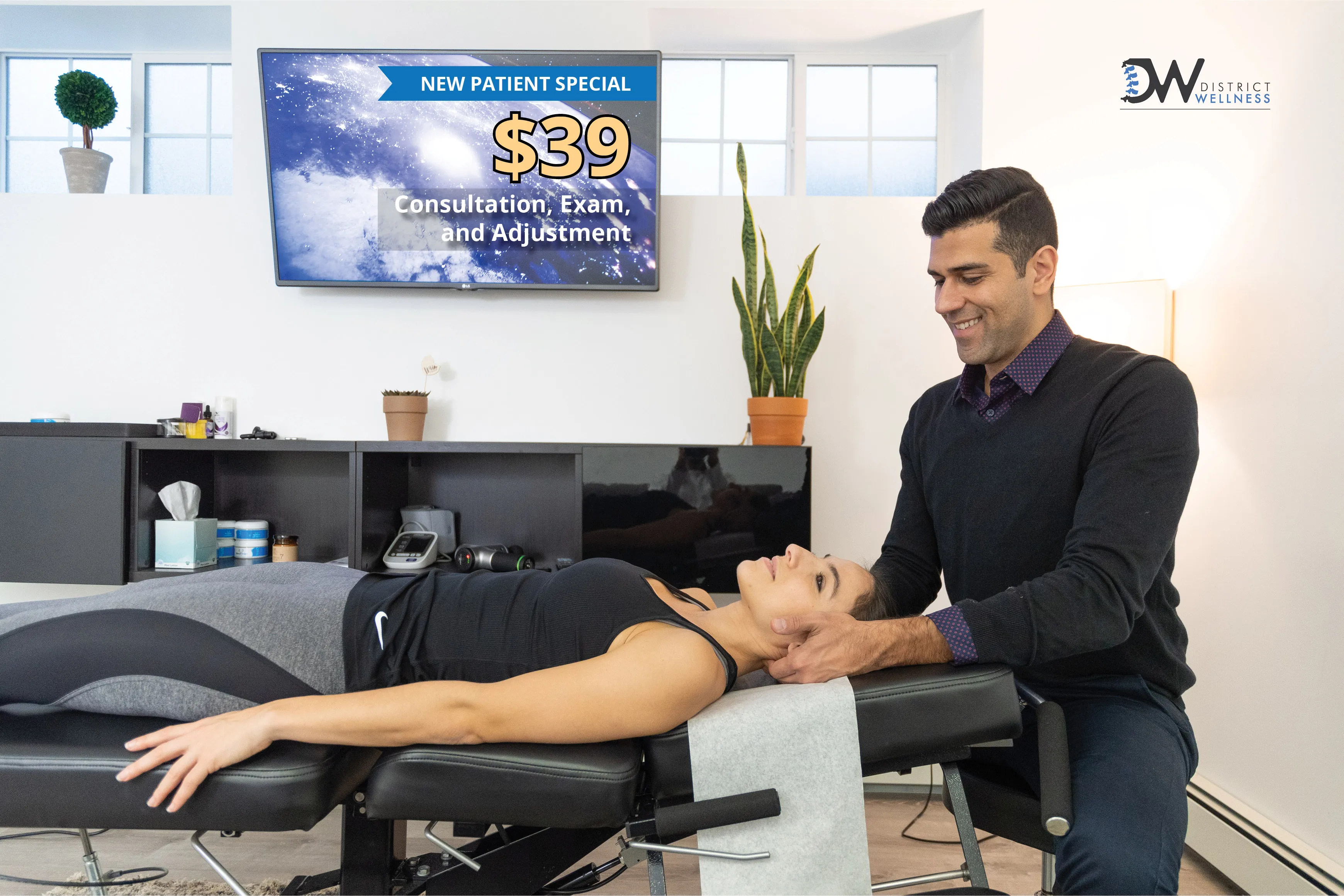
A thorough exam includes testing reflexes at the biceps, triceps, and brachioradialis, checking dermatomal sensation patterns, and often Spurling’s test — gently compressing and rotating the neck to see if it reproduces the arm symptoms. This kind of nerve-tracing evaluation is part of what District Wellness does for numbness and tingling complaints generally, not just hand cases.
Why This Matters for Treatment
If the compression is genuinely at the wrist, chiropractic care can still help through soft tissue work on the forearm flexors and by addressing wrist joint mechanics, but the primary fix may eventually require splinting or, in severe persistent cases, surgical referral. If the compression is at the neck, treating the wrist does nothing for the actual source, and the numbness will keep coming back no matter how ergonomic the keyboard setup gets.
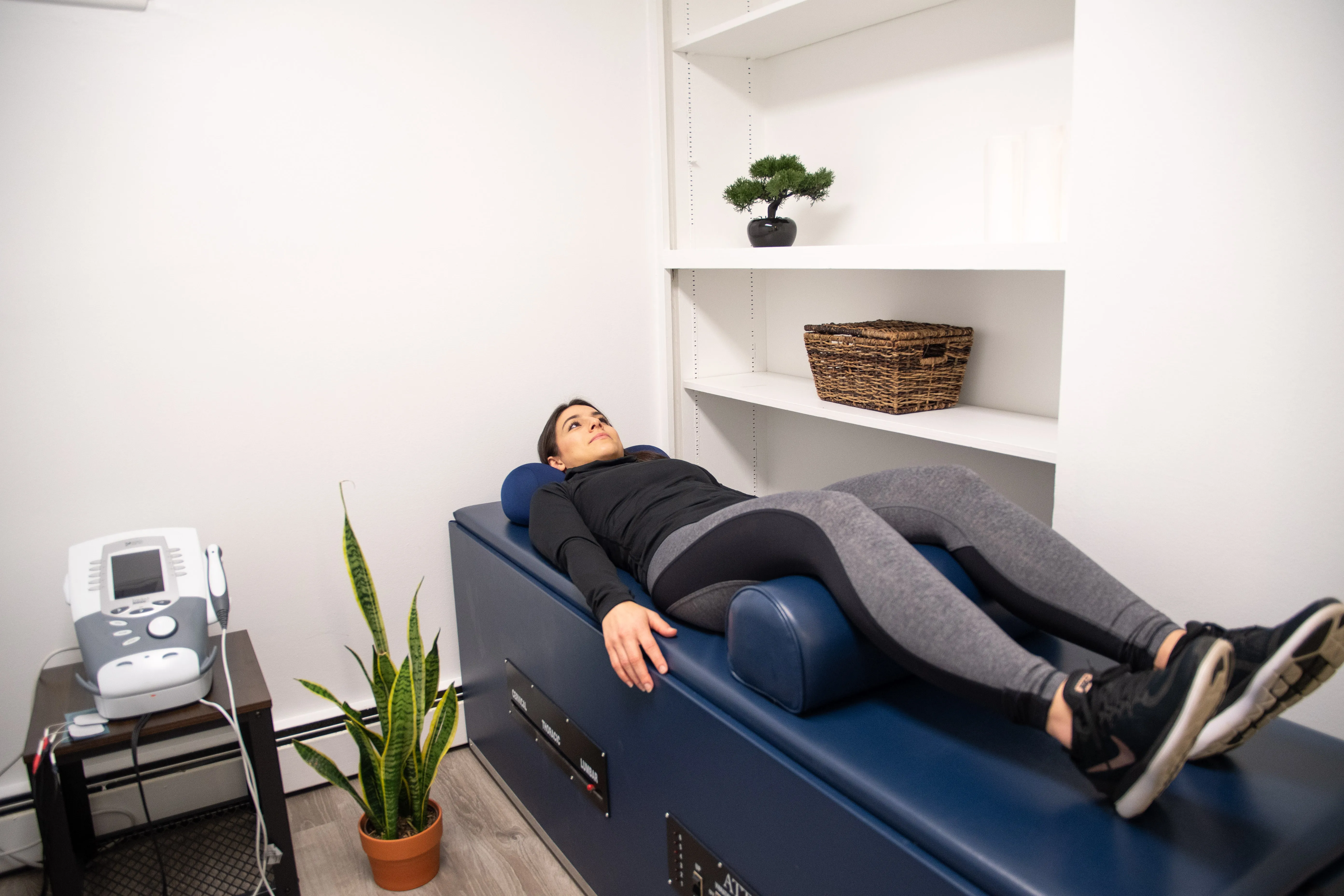
Dr. Hamidi’s approach for cervical radiculopathy focuses on restoring motion to the restricted segments of the neck, reducing the inflammation around the compressed nerve root through targeted mobilization and soft tissue work, and correcting the forward head posture that’s frequently the underlying driver — the same postural pattern discussed in tension headaches vs migraines. Traction-based techniques can also open up the space around the nerve root, giving it room to settle down.
When It’s Actually Both — Double Crush
There’s also a well-documented phenomenon called double crush syndrome, where a nerve compressed at one point, like the neck, becomes more sensitive to a second, milder compression further down the same pathway, like at the wrist. In these cases, a patient can have genuine carpal tunnel syndrome that stays stubbornly symptomatic until the cervical component is also addressed. This is one of the reasons Dr. Hamidi always examines the entire nerve pathway — from the neck to the hand — rather than assuming the problem lives wherever the symptom is loudest, similar to how repetitive strain patterns are worked up for patients with tennis elbow or carpal tunnel syndrome.
According to the National Institute of Arthritis and Musculoskeletal and Skin Diseases, carpal tunnel syndrome affects roughly 3 to 6 percent of adults, but nerve compression symptoms in the hand have multiple possible origins along the nerve’s path, which is why an accurate diagnosis matters before starting treatment. The American Academy of Orthopaedic Surgeons has a solid overview of cervical radiculopathy symptoms and evaluation for anyone wanting to read further.
Common Questions
Can a chiropractor diagnose which one I have? Yes. Dr. Hamidi uses orthopedic and neurological testing to localize where the compression is actually occurring before recommending a treatment plan, which avoids months of treating the wrong location.
Do I need an EMG or nerve conduction study? Sometimes, particularly for confirming carpal tunnel severity or when the clinical picture is mixed. Dr. Hamidi will refer for one if the exam findings are ambiguous or don’t respond to conservative care as expected.
Is desk work really a major cause of this? It’s one of the biggest contributors Dr. Hamidi sees in the Arlington office, particularly for people who sit hunched forward at a laptop for eight-plus hours without breaks — a pattern also covered in why your lower back hurts when you sit all day.
Takeaway
Hand numbness and tingling deserve an accurate diagnosis, not a guess, because the wrist and the neck require entirely different treatment approaches. If you’ve been dealing with nighttime hand tingling that isn’t improving with a wrist splint, it may be time to check what’s happening higher up the chain. Call District Wellness at (571) 568-8496 or schedule online at /new-patient-scheduling.