
Dr. Hamidi gets a version of this question almost weekly: a patient arrives with an MRI report in hand, sees the words “disc bulge” or “disc herniation,” and assumes the worst. Those two terms describe different things, and the distinction actually matters for how we approach treatment, not just for terminology’s sake.
What a Disc Actually Is
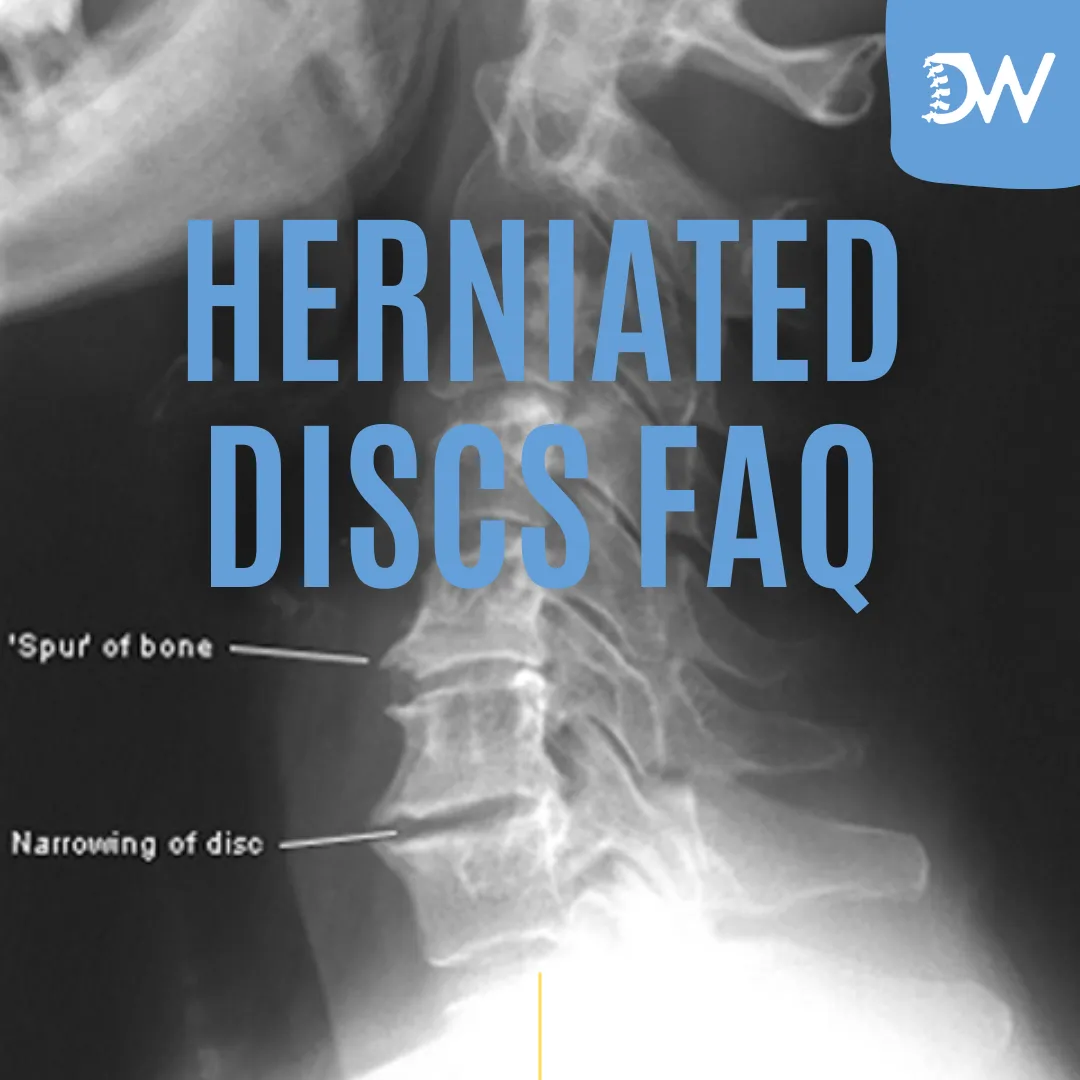
Each spinal disc sits between two vertebrae and functions as a shock absorber. It has a tough outer ring called the annulus fibrosus and a softer, gel-like center called the nucleus pulposus. Think of it structurally like a jelly donut, though the analogy oversimplifies a fairly complex tissue. Damage to a disc generally falls somewhere on a spectrum, and where it falls on that spectrum determines whether you’re dealing with a bulge or a true herniation.
Bulging Disc: The Outer Ring Stays Intact
A bulging disc occurs when the annulus weakens and the disc extends outward beyond its normal boundary, but the outer ring itself does not tear. Picture the donut sagging slightly under weight without splitting open. Bulging discs are extremely common and are frequently found incidentally on imaging in people with zero back pain, which is why a bulge on a report doesn’t automatically explain your symptoms. Bulges tend to be broad, affecting a wide arc of the disc’s circumference, and they often develop gradually from age-related changes and repetitive loading rather than a single event.
Herniated Disc: The Ring Has Torn
A herniated disc, sometimes called a slipped or ruptured disc, means the annulus has actually torn, allowing some of the softer inner material to push through into the spinal canal. This is a more localized, focal event compared to a bulge, and it’s far more likely to directly irritate a nearby nerve root because the herniated material can physically contact and inflame that nerve. This is the mechanism behind classic sciatica symptoms: sharp, shooting pain down the leg, numbness, or weakness following a specific nerve distribution. The National Institute of Neurological Disorders and Stroke describes herniated disc material pressing on nearby nerves as a primary source of radiating pain and weakness (NINDS).
Why the Distinction Changes Treatment
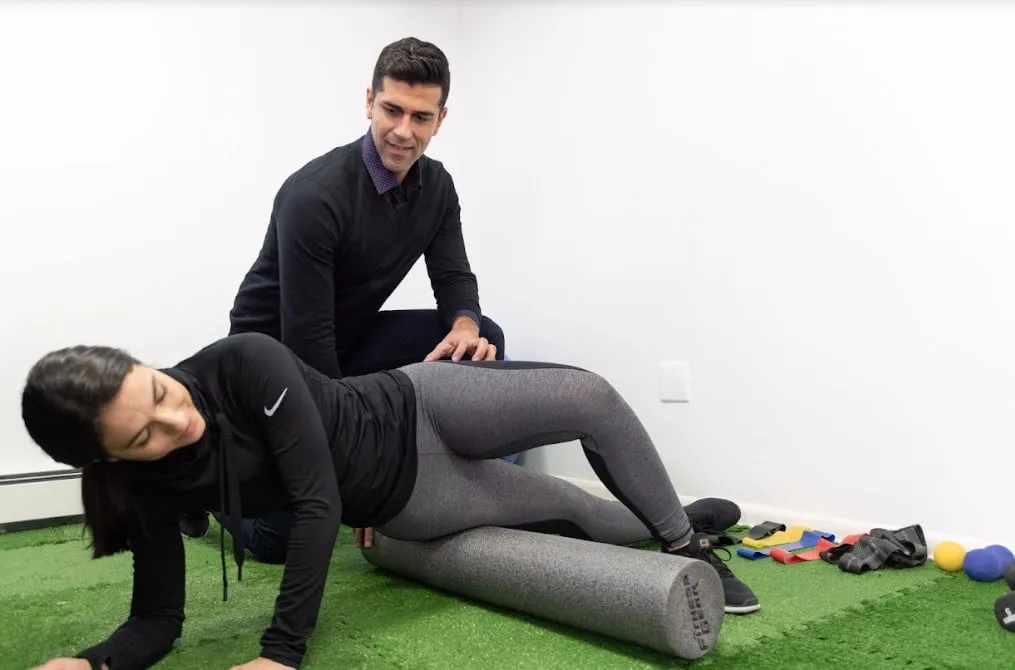
A broad bulge without nerve compression typically responds well to conservative care aimed at reducing mechanical stress on the disc, improving surrounding muscle support, and restoring normal movement patterns through the spine. A true herniation with nerve root involvement needs the same conservative approach in most cases, but we watch more closely for red flags: progressive weakness, loss of specific reflexes, or symptoms in both legs, which would change the plan and warrant a referral for imaging or specialist evaluation rather than continued conservative care alone.
At District Wellness, evaluation for either presentation includes orthopedic and neurological testing to map out exactly which structures are involved, not just where the pain is reported. For patients with associated numbness or tingling, that testing tells us whether we’re dealing with nerve root irritation versus a purely mechanical, muscular pattern. Treatment for confirmed disc-related back pain usually combines specific spinal adjusting, flexion-distraction or decompression-style techniques, and a graded exercise progression that avoids the positions most likely to aggravate the disc while it heals.
What the MRI Report Doesn’t Tell You
Imaging shows structure, not necessarily the source of your pain. Studies referenced by NIAMS note that disc bulges and even some herniations appear on MRI in a substantial percentage of pain-free adults, which is why we always correlate imaging findings with your actual exam and symptom pattern rather than treating the picture in isolation (NIAMS). This is a point I touched on from a different angle in You Don’t Have Sciatica: Debunking Common Misdiagnoses, where imaging language often creates more fear than it should.
The SI Joint Complicates the Picture
Not every case of radiating low back and leg pain traces back to the disc at all. The sacroiliac joint, where the base of the spine meets the pelvis, can produce pain that mimics a disc problem closely enough to fool an untrained eye, including referral into the buttock and upper leg. Distinguishing SI joint pain from disc-related sciatica matters because the treatment approach differs meaningfully: SI joint dysfunction responds to joint-specific mobilization and stabilization work, while disc irritation needs the flexion-distraction and load-management approach described above. We break down how to tell them apart in SI joint pain: the low back pain that isn’t sciatica. Part of Dr. Hamidi’s exam for any radiating low back complaint specifically rules the SI joint in or out before settling on a disc-focused treatment plan, since treating the wrong structure delays recovery even when the technique itself is sound.
Common Questions
Can a bulging disc turn into a herniated disc? It can progress that direction under continued mechanical stress, which is one reason we address bulges early with movement correction and load management rather than waiting for symptoms to worsen.
Do I need surgery for a herniated disc? Most herniated discs improve with conservative care over several weeks to months. Surgery is generally reserved for cases with progressive neurological deficit or pain that fails to respond to an adequate trial of conservative treatment.
Will chiropractic adjustments make a herniation worse? When appropriately applied and adjusted to the specific presentation, spinal manipulation and mobilization techniques are commonly used in conservative disc care. Dr. Hamidi tailors technique and force to what the specific disc and nerve involvement can tolerate.
Takeaway
A bulging disc and a herniated disc are not interchangeable terms, and confusing the two leads to either unnecessary panic or missed red flags. What matters most is a careful exam that connects the imaging language to what’s actually happening in your body. If you’ve been handed an MRI report you don’t fully understand, or you’re dealing with back pain that radiates into a leg, Dr. Hamidi can walk through what it actually means for your treatment. Call District Wellness at (571) 568-8496 or schedule through new patient scheduling. You can also explore our full services or read more frequently asked questions.