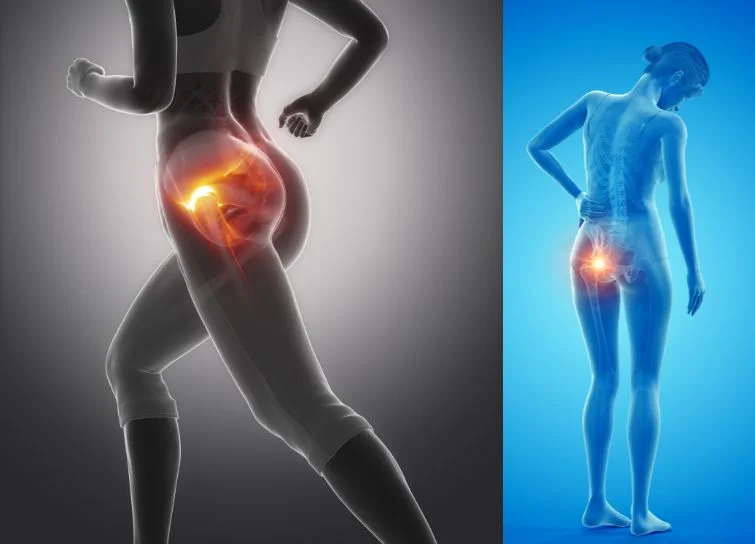
A patient will come into District Wellness convinced they have sciatica — the pain is on one side, it’s low, it’s been dragging on for weeks — and after Dr. Hamidi runs through a few specific orthopedic tests, the picture looks different. No pain shooting past the knee. No numbness following a nerve pattern down the leg. Instead, the pain is centered right around one dimple at the base of the spine, gets sharper standing up from a seated position, and flares walking up the escalator at the Courthouse or Ballston Metro stops. That’s a strong pattern for sacroiliac, or SI, joint dysfunction, not a disc or nerve issue at all.
The SI joints sit on either side of the sacrum, connecting the base of the spine to the pelvis. They’re not designed for a huge range of motion — a few degrees of movement is normal — but they absorb a tremendous amount of load every time you walk, stand up, or shift weight from one leg to the other. When one of these joints becomes hypermobile (too loose) or hypomobile (locked up and restricted), the surrounding ligaments and muscles compensate, and that compensation is what generates the pain.
Why SI Joint Pain Gets Misdiagnosed
Sciatica gets blamed for a lot of low back pain it isn’t actually causing, and it’s an easy mistake to make because both conditions can radiate into the buttock and upper thigh. The distinguishing features Dr. Hamidi looks for:
- Location: SI pain tends to stay localized right at the joint, near the dimples above the buttock, rather than tracking down the back of the leg past the knee.
- Aggravating movements: Standing from sitting, rolling over in bed, and single-leg activities like climbing stairs or putting on pants tend to spike SI pain specifically.
- No neurological signs: True sciatica usually comes with numbness, tingling, or weakness following a specific nerve pathway. SI dysfunction generally doesn’t.
- Onset: SI joint pain often follows pregnancy, a fall onto one hip, a single misstep off a curb, or repetitive one-sided loading like always carrying a toddler on the same hip.

Who Gets It
Dr. Hamidi sees a fairly predictable set of patients with SI joint dysfunction in the Arlington office. Runners training on the W&OD or Mount Vernon trails who ramped up mileage too fast. New parents whose pelvic ligaments loosened during pregnancy and haven’t fully re-stabilized. Office workers who sit with their wallet in a back pocket for eight hours a day, which rotates the pelvis unevenly every single day. And people recovering from a motor vehicle accident where the impact loaded one side of the pelvis harder than the other, something covered in more depth in the first 72 hours after a car accident.
How Chiropractic Care Addresses SI Dysfunction
Treatment starts with figuring out which direction the joint is dysfunctional — restricted or loose — because the approach differs. For a locked or hypomobile joint, Dr. Hamidi uses a specific low-force adjustment to restore the small amount of motion the joint is supposed to have, which frequently gives immediate relief. For a hypermobile joint, the priority shifts to stabilizing the surrounding musculature — specifically the glutes, deep core stabilizers, and pelvic floor — because adjusting an already-loose joint without addressing the stability deficit tends to just recreate the same problem days later.
Soft tissue work through the piriformis, glute medius, and lumbar paraspinals is almost always part of the plan, since these muscles guard and tighten around an irritated SI joint. Patients dealing with both SI dysfunction and general muscular tightness often benefit from pairing adjustments with massage therapy — Jeff Fischer, Sawyer Smith, and Carla Thomas on the massage team regularly work alongside Dr. Hamidi’s chiropractic care for exactly this kind of combined case.
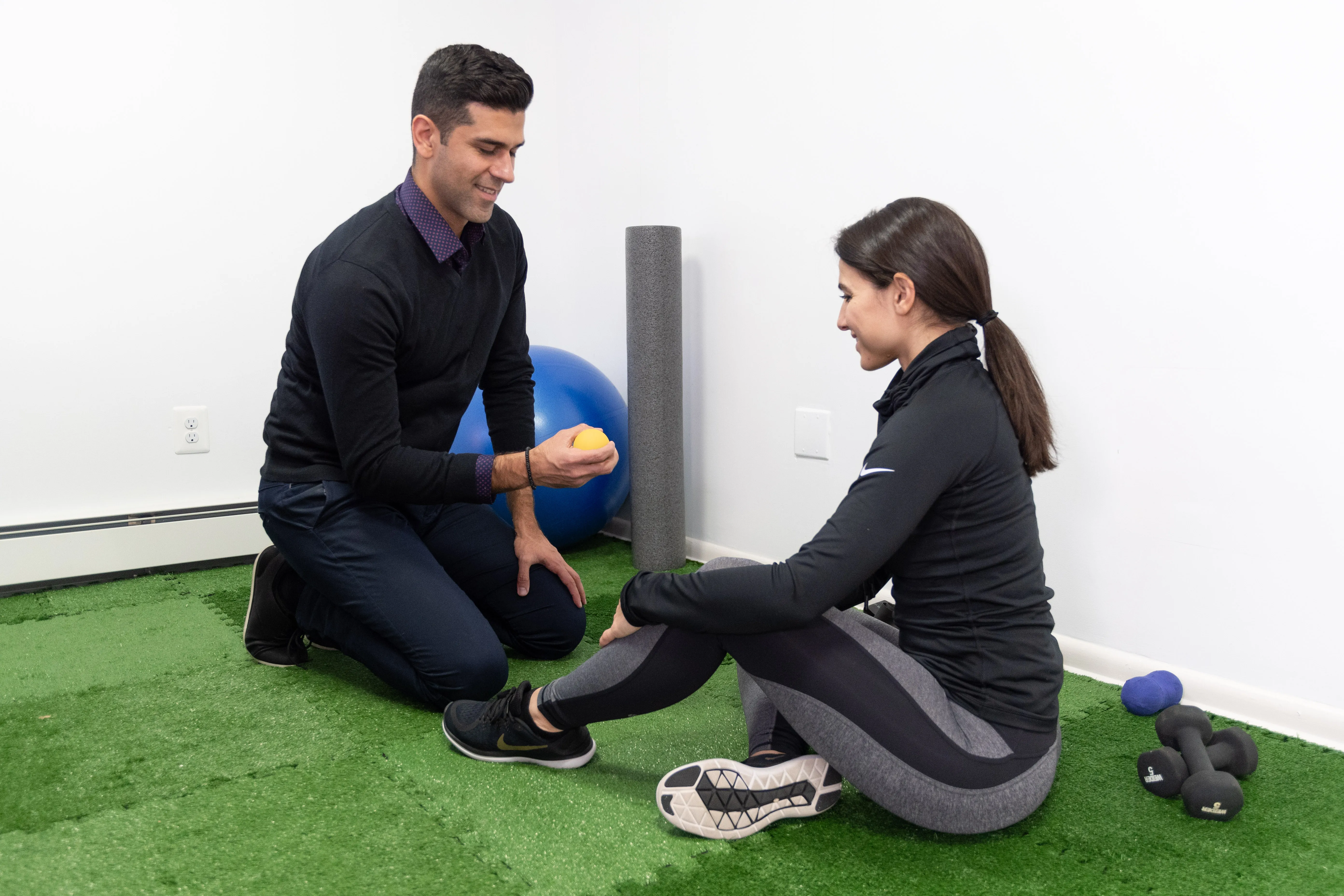
Exercises That Actually Help
A few movements Dr. Hamidi commonly prescribes for SI joint stability:
- Glute bridges — activates the glutes to offload the SI joint during hip extension.
- Bird dogs — trains the deep core and lumbar stabilizers to control pelvic rotation.
- Single-leg standing balance — retrains proprioception through the pelvis, particularly useful for postpartum patients.
- Side-lying clamshells — targets the glute medius, which stabilizes the pelvis during walking.
Patients are told to avoid deep unsupported forward bends and high-impact single-leg activity, like box jumps or uneven-terrain trail running, until the joint has stabilized — similar guidance to what’s discussed for hip pain relief exercises.
According to the National Institute of Arthritis and Musculoskeletal and Skin Diseases, mechanical causes account for the vast majority of low back pain cases, and joint dysfunction of this kind is a well-recognized contributor distinct from disc-related pain. The MedlinePlus overview of sacroiliitis and SI dysfunction is a useful patient-facing reference if you want to read more before your visit.
Common Questions
Can SI joint pain go away on its own? Sometimes, especially if it was triggered by a single event like an awkward step off a curb. But if it’s been present more than two or three weeks, or it’s recurring, the joint likely needs targeted mobilization and a stability program rather than time alone.
Is SI joint pain the same as hip pain? They’re close neighbors and often confused for each other. True hip pain tends to center more in the groin or the side of the hip, while SI pain sits right at the base of the spine. Dr. Hamidi differentiates them with specific orthopedic tests during your evaluation.
Will I need imaging before treatment starts? Not usually. SI joint dysfunction is diagnosed primarily through physical examination and movement testing. Imaging is reserved for cases with red-flag symptoms or when conservative care isn’t producing expected progress.
Takeaway
Not every low back ache is a disc problem or sciatica, and treating SI joint dysfunction like a disc issue rarely resolves it. If your pain lives right at the base of your spine and flares when you stand up or climb stairs, it’s worth getting an accurate diagnosis. Call District Wellness at (571) 568-8496 or book online at /new-patient-scheduling to get your pelvis and SI joints properly assessed.