
Every December, Dr. Hamidi sees the same wave of patients come through the Arlington office: people who spent six, eight, ten hours in a car headed up I-95 to see family, or folded into a middle seat out of DCA, and came home with a neck that will not turn. It is not a coincidence. Sitting still in a fixed position, arms braced on a steering wheel or armrest, head craned forward toward a phone or a tiny seatback screen, loads the cervical spine in ways it was never built to hold for that long. Add a heavy bag slung over one shoulder through security and a car seat that does not support your lower back, and by the time you are unpacking presents, your neck and shoulders are locked up.
Why Sitting Still Hurts More Than Moving
It seems backwards, but a body that is not moving accumulates more strain than one that is. Muscles need small, constant shifts in position to keep blood flowing and to avoid isometric fatigue, where a muscle stays contracted in one position without relief. On a long drive down the GW Parkway and onto I-95, the trapezius and levator scapulae muscles at the base of your skull stay mildly contracted for hours, bracing your head against every lane change and pothole. On a flight, the same thing happens while your neck also tips forward toward a screen. That sustained low-grade tension is a classic driver of tension-type headaches, and it is often what turns a normal travel day into a week of stiffness.
The Middle Seat Problem
Airline seats do not support a neutral neck position. Without a headrest that actually meets the back of your skull, most people end up leaning toward the window, toward the aisle, or slumped forward, all of which rotate or side-bend the neck for the length of the flight. Combine that with turbulence and the small jolts of landing, and it is easy to end up with the kind of joint irritation that mimics whiplash, minus the crash. Patients who fly through National with a laptop bag on one shoulder often add a rotational component too, since the weight pulls one shoulder down and forces the neck to compensate to keep the head level.
What Long Car Rides Do to Your Lower Back and Neck Together
It is rarely just the neck. A seven-hour drive to visit family in Ohio or the Carolinas keeps the hips flexed and the pelvis tilted for the entire trip, which flattens the natural curve of the lower back and forces the upper spine to round forward to compensate. That chain reaction is why so many holiday travelers come in with both neck pain and low back pain at the same visit. Dr. Hamidi treats these together, because releasing tension in the mid-back and improving pelvic position often takes pressure off the neck without touching it directly.
What to Do Before the Trip
- Adjust your headrest so it touches the back of your head, not just your upper shoulders.
- Set your side mirrors slightly wider than normal, which naturally discourages leaning or craning to check blind spots.
- Pack a small lumbar roll or rolled towel for your lower back on long drives.
- Stop every ninety minutes to walk for five minutes, even at a gas station. Movement resets the muscles that have been holding one position.
- On flights, request an aisle seat when possible so you can stand and stretch without waiting for the cart to clear.
What to Do During the Trip
Small, frequent movement beats one big stretch at the destination. Every 20 to 30 minutes, gently roll your shoulders back, tuck your chin slightly to lengthen the back of your neck, and turn your head side to side within a comfortable range. On a plane, use the walk to the restroom as an excuse to stand tall and reach your arms overhead for a few seconds. None of this fixes an underlying misalignment, but it keeps the muscles from locking down as hard.
When It Is More Than Normal Stiffness
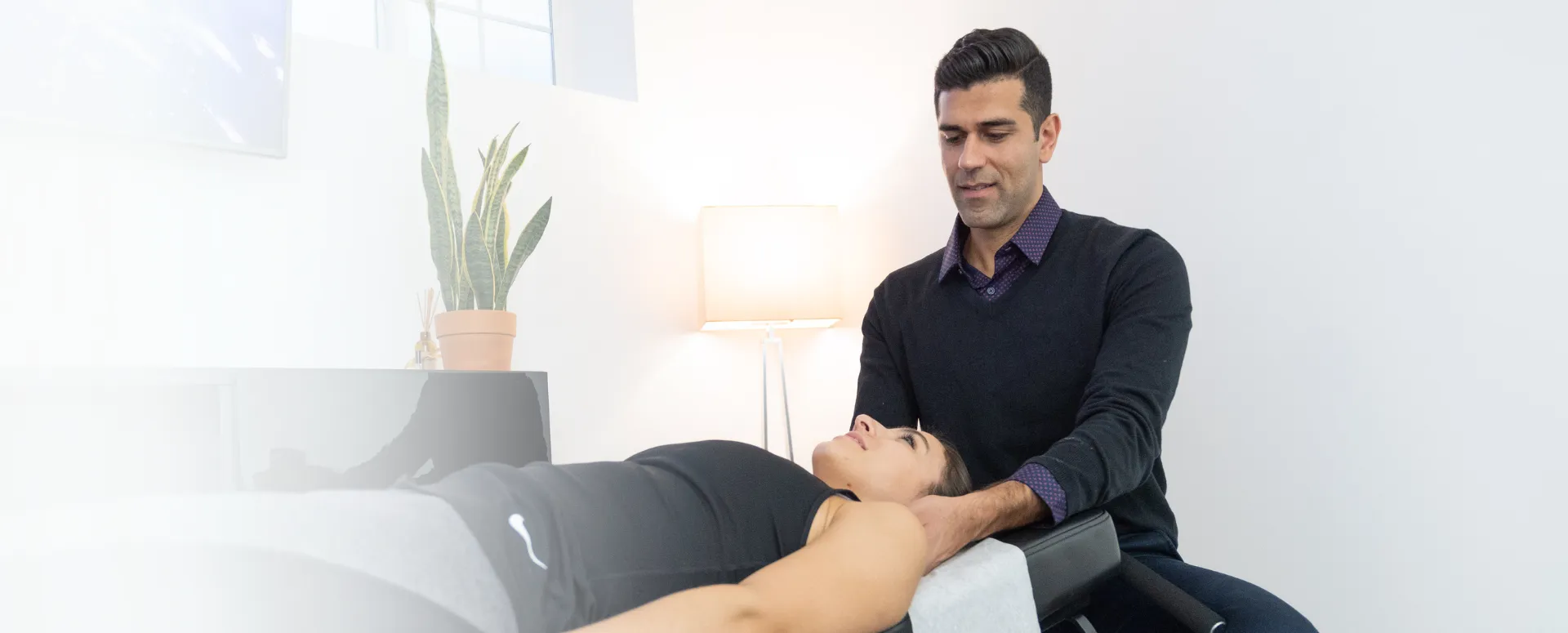
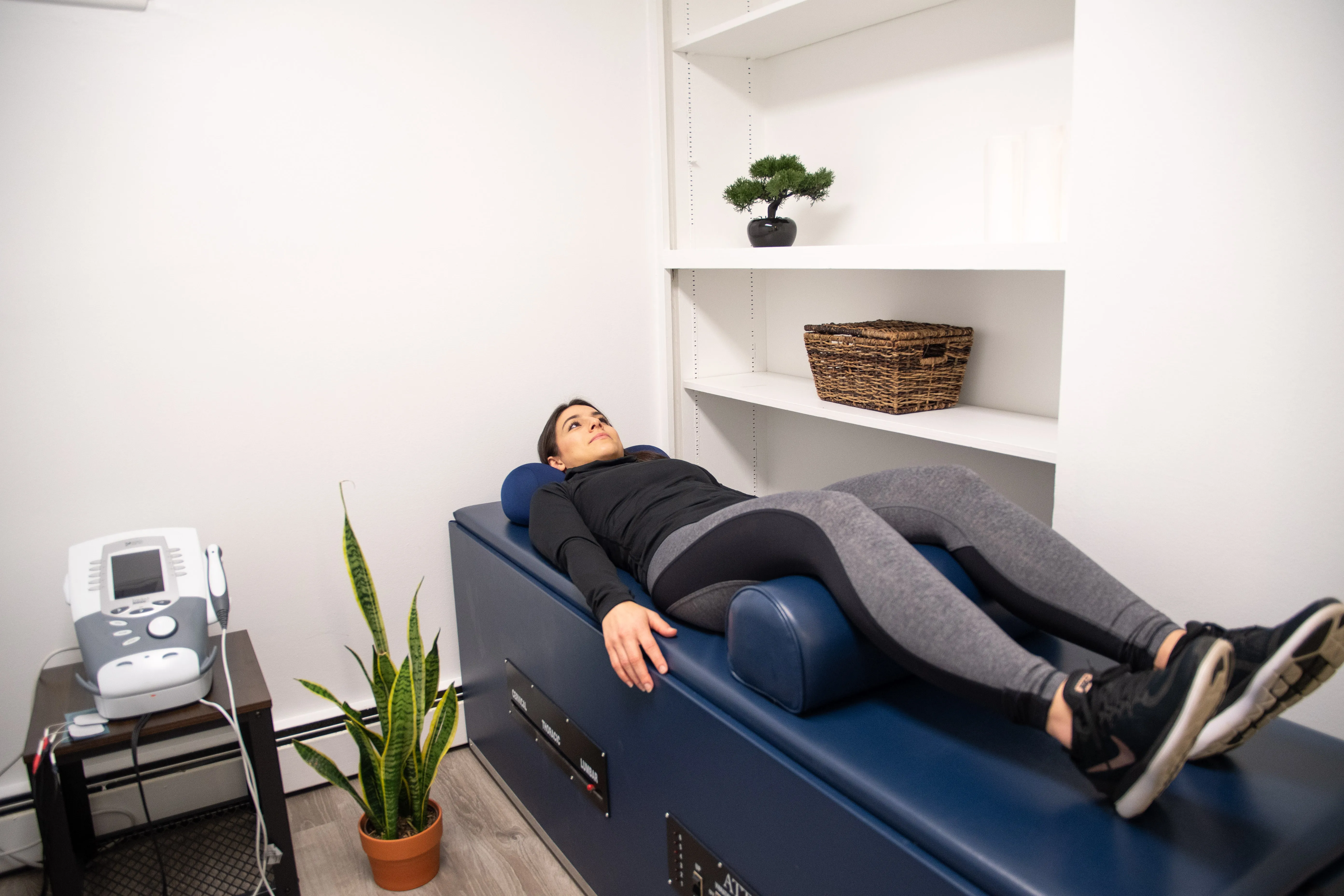
A little soreness after a long trip is normal and usually settles within a day or two. It is worth getting checked when the pain does not improve after a few days, when it comes with numbness or tingling down an arm, when turning your head sharply reproduces the pain, or when a dull ache turns into a headache that will not quit. Dr. Hamidi’s evaluation includes checking joint mobility segment by segment through the neck and upper back, testing for any nerve involvement, and looking at how the shoulders and mid-back are moving together, since a stiff mid-back is often the real reason the neck cannot relax. If numbness or tingling extends into the hand rather than staying in the neck and shoulder, it is worth reading carpal tunnel or pinched nerve in your neck, since a cramped travel posture can aggravate both conditions at once.
Getting Back to Neutral
Treatment for travel-related neck pain usually combines gentle cervical and thoracic adjustments to restore joint motion, soft-tissue work on the overworked shoulder and neck muscles, and a short list of stretches to do at home. Most patients feel noticeably looser after one or two visits, and returning that mid-back mobility is often what finally lets the neck settle down for good. If headaches have been part of the picture, they tend to ease as the neck tension resolves, which is consistent with the pattern Dr. Hamidi describes in more detail in an earlier post on signs you need a chiropractic adjustment right now.
Common Questions
Is it normal to feel worse the day after a long drive than during the drive itself? Yes. Adrenaline and movement often mask stiffness during travel, and inflammation tends to peak 24 to 48 hours after the muscles have been held in one position for that long.
Can a neck pillow actually prevent this? A well-fitted travel pillow that supports the head in a neutral position, rather than letting it tip forward or to the side, does help reduce strain on a flight, though it will not correct an existing misalignment.
Should I stretch my neck aggressively when I get home? No. Aggressive stretching on an already irritated joint can make things worse. Gentle range of motion and a professional evaluation are safer than forcing a stretch.
References
Muscle strain and posture-related neck pain mechanisms are well documented by the National Institute of Neurological Disorders and Stroke and summarized for patients at MedlinePlus.
Takeaway
Holiday travel puts sustained, unnatural strain on the neck and mid-back, and a little prevention during the trip goes a long way. If you are still stiff or sore days after getting home, it is worth having it checked before the New Year gets busy. Call District Wellness at (571) 568-8496 or book online through new patient scheduling and start the year without the travel hangover in your neck.