
Somewhere around the second trimester, a lot of the pregnant patients Dr. Hamidi sees in the Arlington office start describing the same cluster of symptoms: a deep ache low in the back that gets worse by evening, sharp pulling pain along the side of the belly when they stand up too fast, and a sense of pressure or instability in the pelvis that was not there before. These are common, well-recognized parts of pregnancy, driven by real anatomical and hormonal changes, and prenatal chiropractic care is one of the more effective non-drug options for managing them.
Why Pregnancy Changes Your Spine and Pelvis
As the uterus grows, the body’s center of gravity shifts forward, and the lower back naturally increases its curve to compensate, a change that puts more load on the lumbar joints and surrounding muscles. At the same time, the hormone relaxin loosens the ligaments that stabilize the pelvis and sacroiliac joints in preparation for delivery. That is useful for birth, but it also means the joints that normally hold the pelvis steady become more mobile and, for some women, less stable, which is why pelvic pain and what is sometimes called pelvic girdle pain becomes so common in the second and third trimesters.
Round Ligament Pain Explained
The round ligaments support the uterus on either side and stretch considerably as the uterus expands. A sudden movement, like standing up quickly, rolling over in bed, or sneezing, can cause a sharp, sometimes startling pull along the lower belly or groin. This is round ligament pain, and while it is uncomfortable, it is a normal part of pregnancy rather than a sign of a problem. Moving more slowly and deliberately, especially when changing positions, helps reduce how often it happens. Gentle chiropractic and soft-tissue work around the pelvis and hips can also ease some of the surrounding muscular tension that makes each pull feel worse.

How Prenatal Chiropractic Care Works
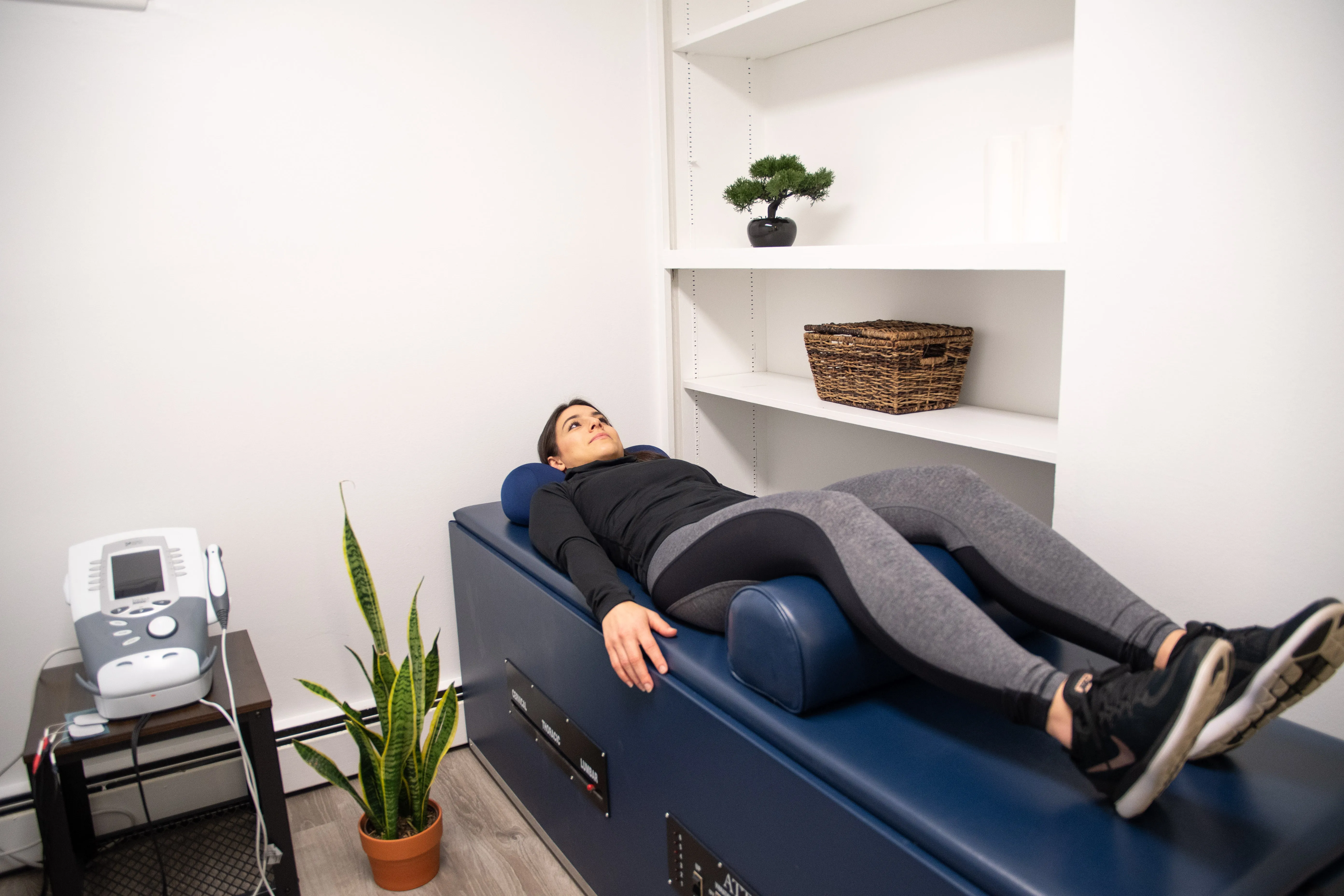
Prenatal adjustments use techniques specifically modified for pregnancy. Patients are positioned on a specially designed table that accommodates a pregnant belly, or treated side-lying, so there is never pressure placed directly on the abdomen. Dr. Hamidi focuses on restoring balanced motion to the pelvis, sacroiliac joints, and lower spine, and uses gentle, low-force techniques rather than the higher-force adjustments sometimes used with other patients. The goal is to reduce nerve irritation, ease muscular compensation patterns, and help the pelvis move as symmetrically as possible as the body changes week to week.
The Webster Technique and Pelvic Balance
Many chiropractors trained in prenatal care, including Dr. Hamidi, use a specific protocol called the Webster Technique, which focuses on analyzing and reducing sacral misalignment and the resulting tension on the ligaments that support the uterus. The technique is widely discussed for its role in supporting overall pelvic balance during pregnancy. It is worth being direct about what this can and cannot promise: chiropractic care is not a proven method for turning a breech baby, and no responsible provider should claim otherwise. What it can do is support better pelvic alignment and comfort, which some practitioners believe may contribute to a more favorable environment for the baby to move, alongside the medical guidance of your OB or midwife.
Is It Safe?
Chiropractic care during pregnancy has a strong safety record when performed by a provider trained in prenatal techniques. The American College of Obstetricians and Gynecologists recognizes musculoskeletal pain, including low back and pelvic girdle pain, as common in pregnancy and supports conservative, non-pharmacologic approaches as a first line of management. That said, every pregnancy is different, and Dr. Hamidi always coordinates with a patient’s OB or midwife, especially for high-risk pregnancies, and screens for contraindications at the first visit before any treatment begins.
Beyond the Pelvis: Related Discomfort
Pregnancy often brings related complaints that overlap with pelvic and back pain, including sciatica-like symptoms from pressure on the sciatic nerve, hip pain from altered gait as the belly grows, and general fatigue from disrupted sleep due to positioning discomfort. Our full prenatal chiropractic services page outlines the techniques used at each stage. Dr. Hamidi treats these as connected rather than separate issues, since improving pelvic alignment often eases nerve irritation and hip strain at the same time. The sacroiliac joint in particular can become a significant pain generator as relaxin loosens its supporting ligaments; our post on SI joint pain: the low back pain that isn’t sciatica explains the mechanics in more detail and applies directly to the pelvic instability many patients feel later in pregnancy. Some patients also benefit from combining adjustments with prenatal massage therapy to further release the muscular tension that builds up as posture shifts through each trimester.
What to Expect at Your First Prenatal Visit
The first visit includes a full history, including which trimester you are in, any complications noted by your OB, and a physical exam focused on pelvic alignment, spinal motion, and posture. From there, Dr. Hamidi builds a treatment plan tailored to your stage of pregnancy, since what helps in month four looks different from what helps in month eight. If you have not been to a chiropractor before, our earlier post on what to expect at your first chiropractic visit covers the general process in more detail.
Common Questions
When should I start prenatal chiropractic care? Many patients start as soon as discomfort begins, which can be any trimester, though some come in early as a proactive measure even without significant pain yet.
Can I continue care after delivery? Yes. Postpartum adjustments help address the abrupt shift back in center of gravity and posture, and many patients continue care while recovering from delivery.
Will the adjustments hurt my baby? No direct pressure is placed on the abdomen at any point, and the techniques used are specifically modified to be gentle and safe for both mother and baby.
References
For more on musculoskeletal changes and pain management in pregnancy, see the American College of Obstetricians and Gynecologists and NICHD.
Takeaway
Back and pelvic pain in pregnancy are common, but they do not have to be something you just tolerate for nine months. Gentle, pregnancy-specific chiropractic care can ease discomfort and support better mobility as your body changes. Call District Wellness at (571) 568-8496 or book through new patient scheduling to talk with Dr. Hamidi about prenatal care.